

A Study in DFIR: Open-Source, Enterprise, and the Art of Analysis
Someone asked me recently how I see DFIR evolving — tooling, automation, and open-source versus enterprise platforms. It’s the kind of question that sounds like a conference panel topic, but the answer is grounded in how work actually gets done. In practice, it isn’t a binary choice. The most effective IR practitioners I’ve worked with…
The Game Is Afoot: Introducing the MalChela Video Series
There’s a moment every analyst knows — the one where an unknown file lands on your desk and the clock starts ticking. You need answers, and you need them fast. MalChela was built for exactly that moment. Today I’m excited to announce the MalChela Video Series on YouTube — a growing collection of tutorial episodes walking through…

MalChela Meets AI: Three Paths to Smarter Malware Analysis
In a previous post I wrote about integrating MalChela with OpenCode on REMnux and giving the AI a quick briefing on the tool suite so it could incorporate them into its analysis workflow. That was a promising proof of concept, but it raised a natural follow-up question: how do you make these integrations more robust,…
Streamline Malware Hash Search with FOSSOR
We’ve all encountered this scenario: you’re reading a threat report from CISA or Microsoft and come across hashes related to a malware infection. You start copying these hashes and head to one of your favorite virus repositories to check if there’s a source available for download so you can analyze the malware yourself. Unfortunately, you…
Enhancing Malware Analysis with REMnux and AI
Those familiar with my work know that I’m a big fan of the REMnux Linux distribution for malware analysis. When I developed MalChela, I included a custom configuration that can be invoked that not only includes the MalChela tool suite but also integrates many of the CLI tools installed in REMnux, providing an easy-to-use GUI.…

2025 Year in Review: Open Source DFIR Tools and Malware Analysis Projects
In 2025, significant advancements in DFIR toolkit development were achieved, including the evolution of MalChela for malware analysis, streamlined CyberPipe tools, and the introduction of Toby, a portable forensics platform. The focus was on creating practical solutions for digital forensics professionals, with all tools available as open-source on GitHub. #DFIR #MalwareAnalysis #OpenSource

CyberPipe-Timeliner: From Collection to Timeline in One Script
CyberPipe-Timeliner was developed in response to a colleague’s query about integrating Magnet Response collections with ForensicTimeliner. This tool automates the workflow, transforming collection data into a unified forensic timeline. With features like date filtering and flexible input options, it streamlines the timeline generation process, making it efficient and user-friendly. #DFIR
CyberPipe v5.3: Enhanced PowerShell Compatibility and Reliability
I’m pleased to announce the release of CyberPipe v5.3, bringing critical compatibility improvements for Windows PowerShell 5.1 and enhanced reliability across all PowerShell environments. The Problem After releasing v5.2 with the new unified banner design, several users reported an interesting issue: CyberPipe would execute perfectly in PowerShell Core, but in Windows PowerShell 5.1, the script would…

Streamline Digital Evidence Collection with CyberPipe 5.2
CyberPipe, developed for incident response, is a PowerShell script facilitating efficient digital evidence collection in enterprise settings. Recent updates include improved collection methods, capabilities like QuickTriage for faster artifact gathering, and enhanced reliability with advanced error handling. Version 5.2 aims to streamline operations while ensuring forensic integrity and transparency. #DFIR
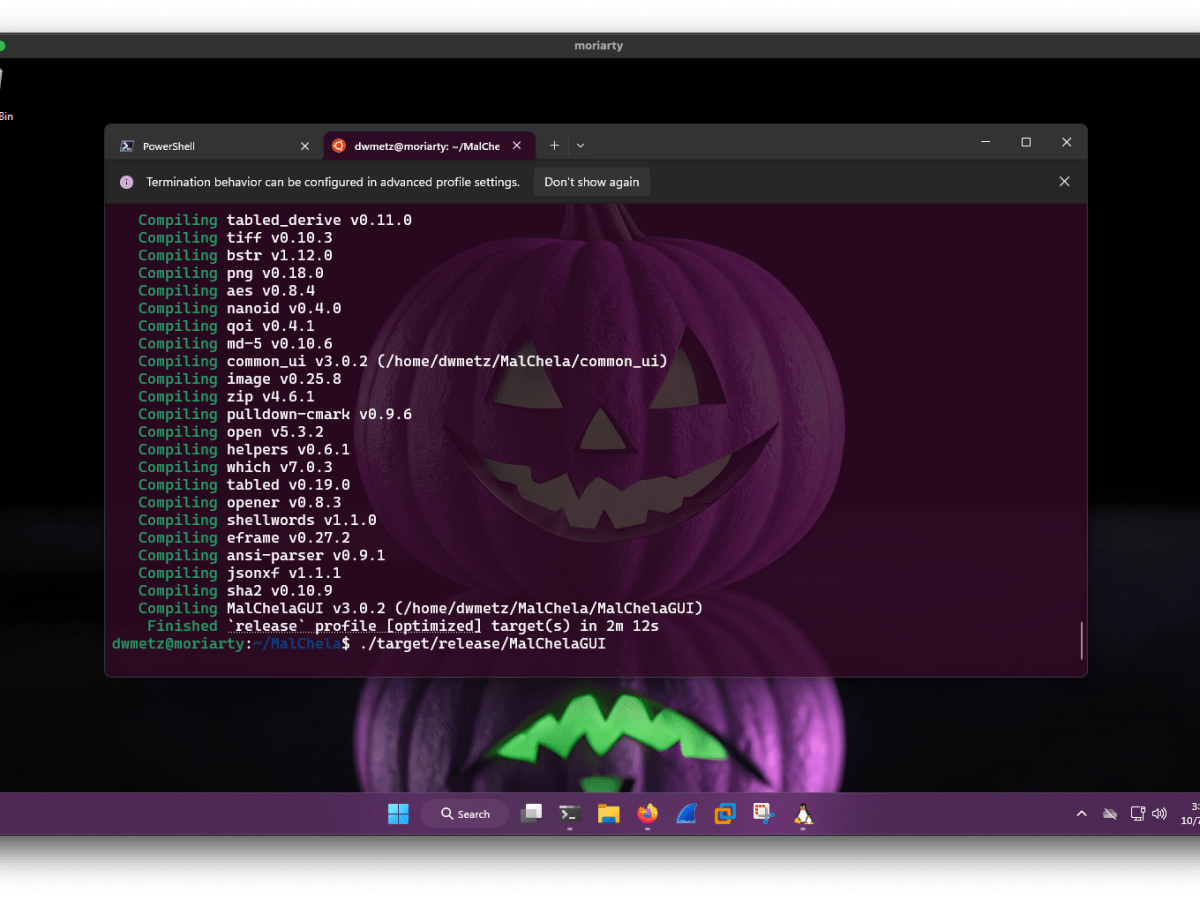
Cross-Platform DFIR Tools: MalChelaGUI on Windows
A trick and a treat this week with a quiet milestone for cross-platform DFIR tooling — MalChelaGUI now runs seamlessly inside Windows through Ubuntu WSL2, with zero configuration required. #DFIR #MalwareAnalysis
Something went wrong. Please refresh the page and/or try again.
Follow My Blog
Get new content delivered directly to your inbox.
 Baker Street Forensics