The Long Game: MalChela v4.0

When I started building MalChela, I had a narrow problem to solve. I was doing a lot of malware triage during incident response engagements and I kept reaching for the same scattered set of tools — VirusTotal, some strings extraction, a hash lookup here, a YARA scan there. The workflow existed, but it wasn’t a workflow. It was a series of scripts and context switches dressed up as a process. I wanted something that unified those steps under one roof, ran locally, and felt like a tool a forensicator actually built.

What I got was MalChela. What I didn’t expect was how far it would go.

From Rust Experiment to Field Platform

The first version was modest. A handful of tools with a unifying CLI runner. The goal was simple: hash a malware sample, look it up, pull strings, run YARA. The kind of triage you want to do in the first ten minutes with an unknown file.

Version 2 brought a desktop GUI — MalChelaGUI, built on egui/eframe. It was a genuine step up in accessibility. Analysts who weren’t comfortable in the terminal had a way in. The toolset kept growing.

Version 3 added structure around the investigation itself. Case management landed, giving results somewhere to live across a session. MCP server integration followed, opening up a whole new mode of operation — Claude working alongside the tools, not just alongside me.

But the GUI carried freight. It meant building for a specific platform, managing a Rust GUI dependency chain, and ultimately shipping something that couldn’t easily follow MalChela into its most interesting new use case: the field.

Toby Changed Everything

If you’ve been following Baker Street Forensics for the last few months, you’ve seen the ‘TOBYgotchi‘ project take shape — a Raspberry Pi Zero 2W running Kali Linux, with a Waveshare e-ink display, PiSugar battery, and MalChela pre-installed. Boot it up, it announces itself on the network, and you’re ready to triage. And yes, I am working on making a full build of TOBY available to the public. Stay tuned…
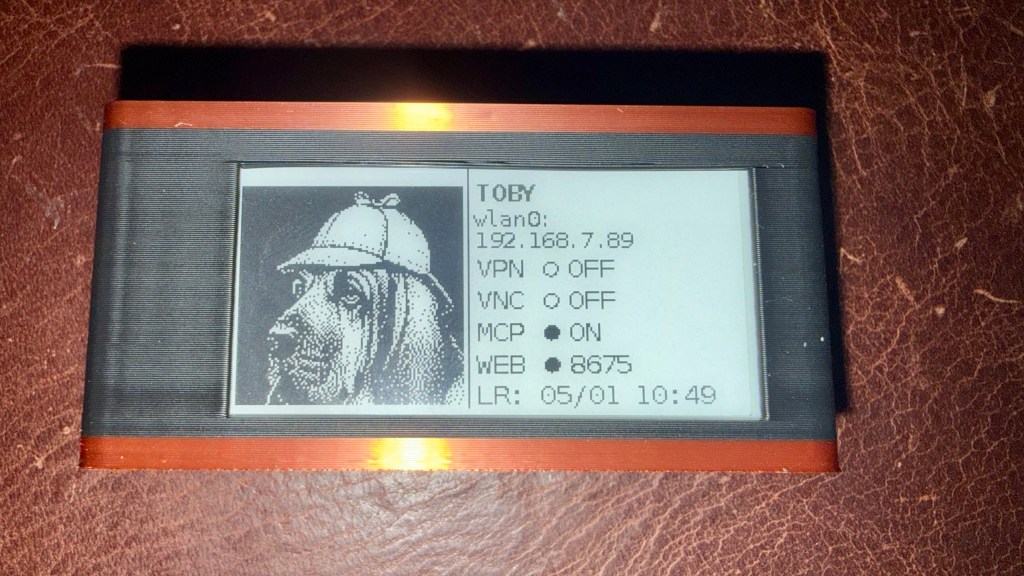
The original field kit vision was: SSH in, run tools from the CLI, pull results. Simple and functional. But the more I used Toby in practice, the more I wanted a better interface — something that worked without a terminal, something a colleague could pick up at a scene without knowing the command syntax.

MalChelaGUI on a Pi Zero 2W is possible but not comfortable. The egui overhead, the X display stack, remote display via VNC — it all works, but it’s friction. What I wanted was something lighter. Something any browser on the network could reach. Something that felt native on an iPad.

That’s what pulled me toward the PWA.

v4.0: The PWA Takes Over

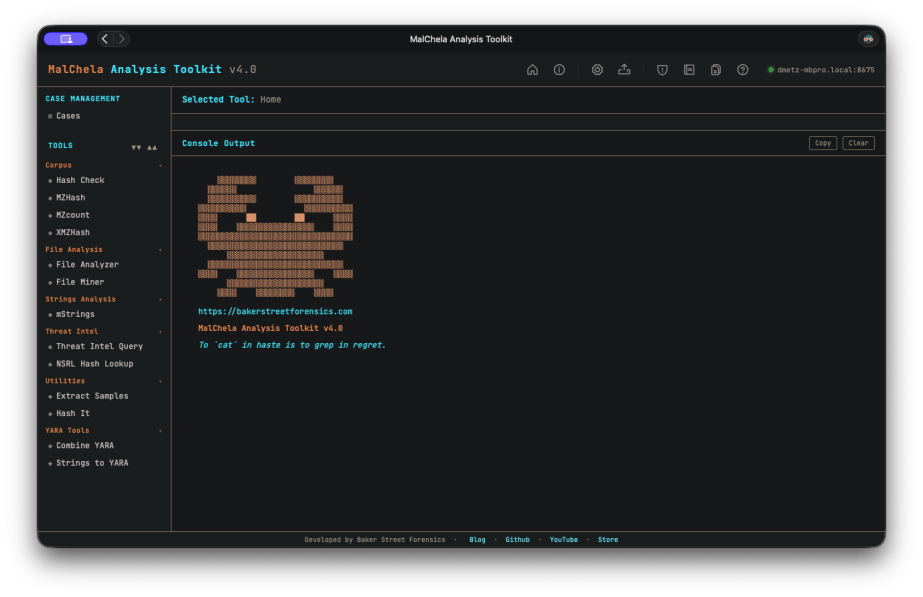
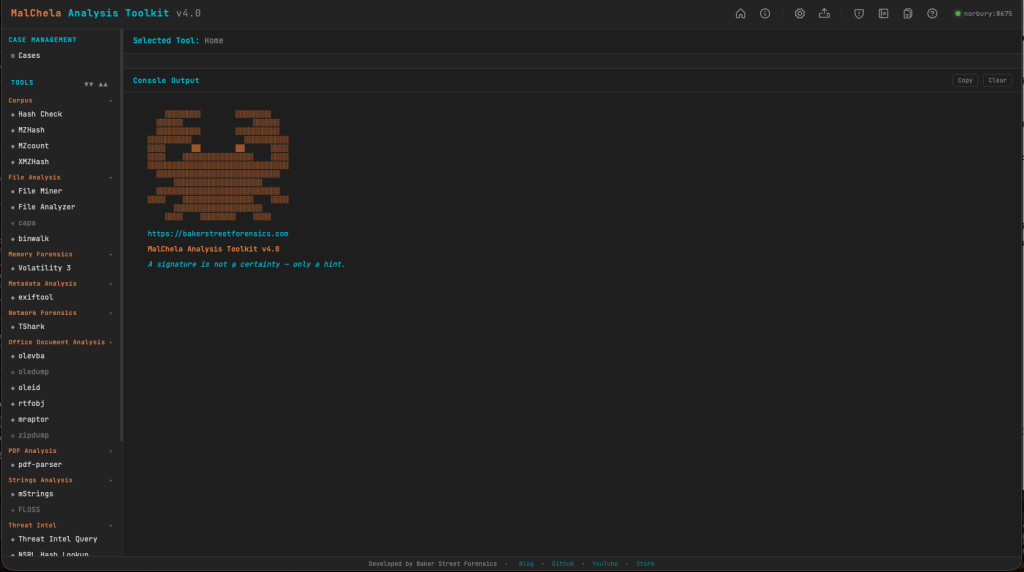
MalChela v4.0 retires the desktop GUI entirely and replaces it with a Progressive Web App as the primary interface.

Every tool that lived in MalChelaGUI has been ported. Most have been improved in the process. The PWA is served locally from the server/ directory — run setup-server.sh once after building the binaries, then start-server.sh on every subsequent boot. Open any browser on the local network and you’re in.

On Toby, this is now part of autostart. Boot the Pi — battery-powered, no cables required — and the server comes up automatically. Connect from your desktop, phone or iPad directly to the PWA. No VNC, no X display overhead, no SSH tunnel. Just a browser pointing at the Pi’s IP.

And here’s the part that makes it genuinely useful in the field: you can upload files directly from whatever device you’re browsing from to the MalChela server. Phone, iPad, laptop — if it has a browser and can reach Toby on the network, it can submit a sample for analysis. The triage station travels with you, and so does the interface.

This is still a work in progress, but the direction is clear: a battery-powered Pi you can drop on a table at a scene, pull out your tablet, and start triaging — no keyboard, no monitor, no additional hardware required.

The field kit I was imagining finally snapped into focus.

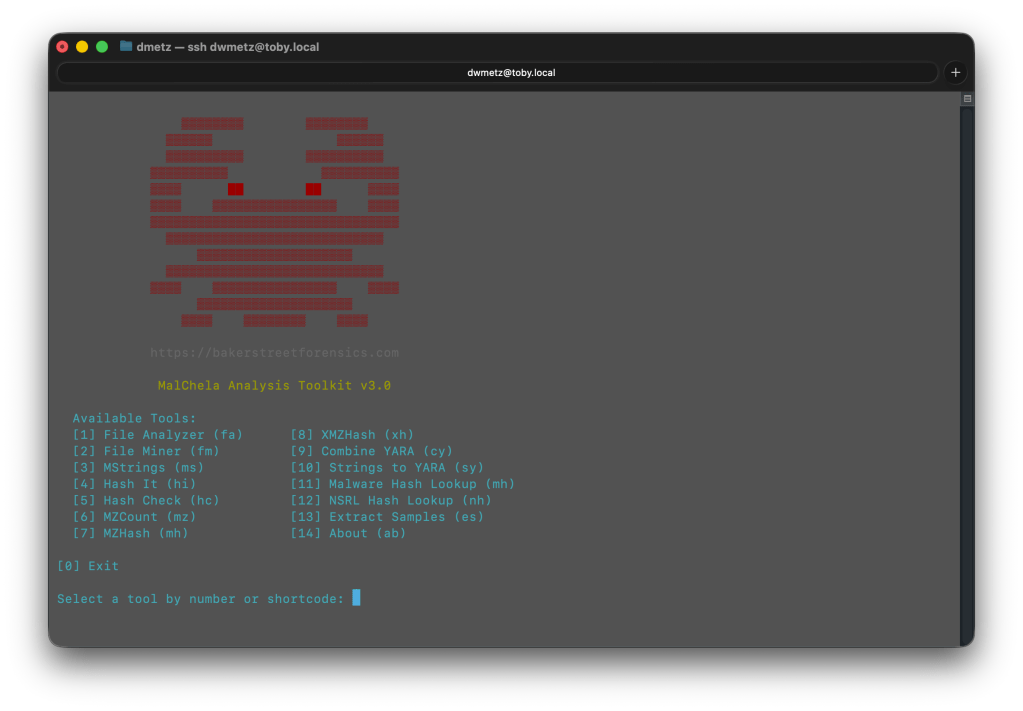
REMnux Support

Running MalChela on a REMnux instance? It’s now even easier to load the REMnux configuration tools.yaml.

Configuration > tools.yaml > Load REMnux

then refresh the browser and you’ve got access to all the REMnux CLI tools from within MalChela.
What Else Is New

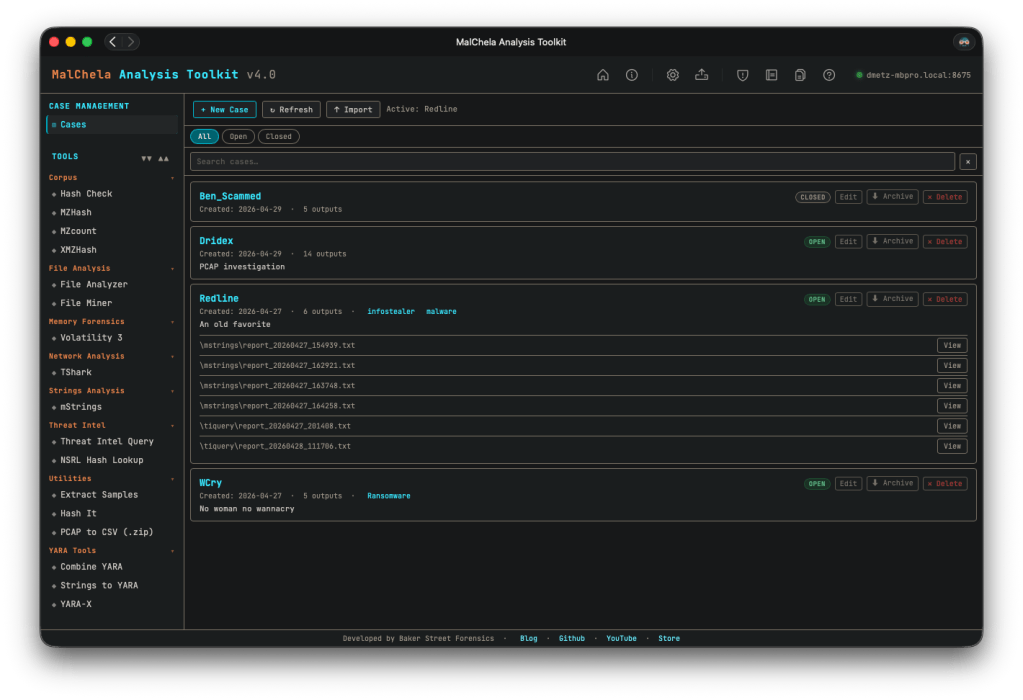
Simplified case management. This one’s been on my list for a while. In previous versions, case management was tied to starting with a file or folder — you had to know what you were investigating before you could create a case. That’s not how IR actually works. v4.0 breaks that dependency: any result can be saved to a case, and you can create a new case from within a running tool session. All the output, whether from the included cargo tools, or 3rd party add-ons like TShark or Volatility, can be saved to your case. The investigation defines the case, not the other way around.
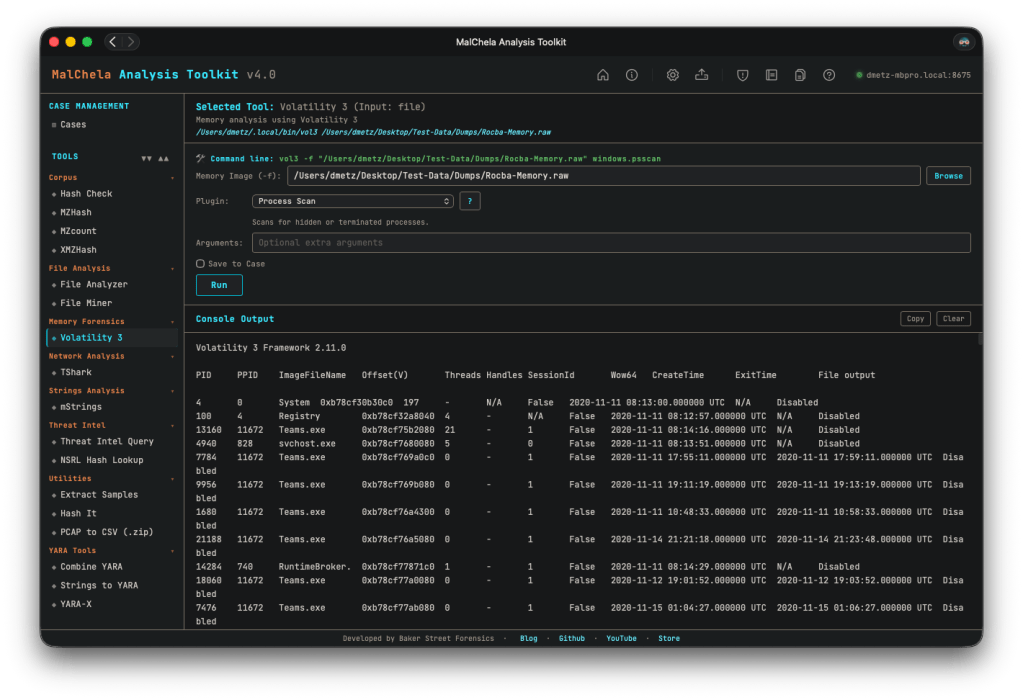
Improved Volatility support. The Volatility integration got a meaningful UX overhaul. The reference panel has been improved, and output now streams inline within the PWA — no more spawning a separate terminal window to see results, which was one of the more awkward edges of the old GUI experience.
Rapid tool iteration via tools.yaml. The PWA is built around a tools.yaml configuration file that defines the tool manifest. Add a new tool, update the YAML, refresh the interface — done. No recompiling the GUI, no rebuilding the binary for a UI change. This makes extending MalChela considerably faster in practice, and opens the door for community-contributed tool configs down the road.

Try MalChela for Yourself

MalChela v4.0 is available on GitHub now: https://github.com/dwmetz/MalChela/

The CLI isn’t going anywhere. If you’re scripting triage workflows, running MalChela headless in an automated pipeline, or just prefer the terminal, everything you relied on in v3.x is still there. The PWA is the new face of MalChela; the CLI is still the engine.

Want to run MalChela on Windows? You can build it in an Ubuntu instance in WSL. Once you start the server in WSL, the Windows host can access the PWA via http://localhost:8675. (In modern WSL2 Microsoft automatically forwards WSL loopback → Windows localhost.)

If you hit any constraints, open an issue on GitHub. I tried to be as thorough as possible in my testing, but there’s only so much a one-man dev team can do. I’m happy assist in troubleshooting and improve the documentation. Rest assured you won’t get a “well, it works in my environment…”
The Game Is Afoot: Introducing the MalChela Video Series

There’s a moment every analyst knows — the one where an unknown file lands on your desk and the clock starts ticking. You need answers, and you need them fast. MalChela was built for exactly that moment.

Today I’m excited to announce the MalChela Video Series on YouTube — a growing collection of tutorial episodes walking through real malware analysis workflows using MalChela, the open-source Rust-based toolkit I’ve been building for the DFIR community. Whether you’re new to the tool or already running it in your lab, there’s something here for you.

Four episodes are available right now in the playlist.


What’s in the Playlist

Ep0 | Installation & First Run

Every case starts somewhere. Episode 0 is your onboarding — installing MalChela, walking through its dependencies, and getting oriented with both the CLI and GUI modes. If you’ve been curious about the tool but weren’t sure where to start, this is the episode to bookmark.


Ep1 | First Contact: Hash, Inspect, Identify

You’ve just been handed a suspicious file. What do you do first?

This episode covers the first three tools in a malware triage workflow — the exact sequence I reach for every time I encounter an unknown file:

  • hashit — generate MD5, SHA1, and SHA256 hashes to protect chain of custody and enable deduplication
  • fileanalyzer — static inspection: entropy analysis, PE header fields, compile timestamps, and import tables
  • malhash — simultaneous lookup against VirusTotal and MalwareBazaar to identify known malware families

By the end of this episode, you’ll take an unknown file from zero to confirmed malware family identification in under five minutes — no sandboxing required.


Ep2 | From Strings to Signatures

Continuing from Episode 1, we go deeper into the confirmed RedLine info-stealer sample using mStrings — MalChela’s string extraction engine. Unlike the traditional strings utility, mStrings runs every extracted string through a detection ruleset and MITRE ATT&CK mapping layer simultaneously, turning raw output into actionable intelligence.

We walk through 62 detections, including PDB path artifacts, hard-coded dropper filenames, WMI queries, credential harvesting patterns, anti-debug checks, and a code injection setup. We then feed the extracted IOCs into Strings2YARA to auto-generate a structured YARA rule — and confirm it fires against the sample using File Analyzer.

By the end, you’ll be reading a malware file not as a pile of strings, but as a window into the attacker’s tradecraft.


Ep3 | REMnux Mode & Custom Tools

MalChela doesn’t work in isolation. Episode 3 covers how to extend the toolkit through the tools.yaml config file and how enabling REMnux mode surfaces an entire distro’s worth of malware analysis utilities directly within MalChela’s interface.

We also explore three built-in integrations: Volatility 3 with a dynamic plugin builder, T-Shark with a searchable reference, and YARA-X — a faster, Rust-native rewrite of YARA.


What’s Coming

The series is ongoing. Future episodes will push further into advanced workflows — think directory-scale triage, corpus management, and the AI-assisted analysis capabilities introduced in MalChela’s MCP integration. Stay subscribed and you won’t miss them.


Get Involved

If MalChela is useful in your work, the best thing you can do is help spread the word:

  • 📺 Subscribe to the YouTube channel — Subscribe to the channel and save the playlist so you don’t miss new episodes as they land.
  • 📖 Follow Baker Street Forensics — Writeups, major releases, and workflow deep dives live here.
  • 💬 Share and comment — If an episode clicks for you, pass it along to a colleague or drop a comment on the video. That feedback genuinely shapes what comes next.

The game is afoot. Let’s get to work.


MalChela is open-source and freely available. Find the project on GitHub.

Toby-Find: Simplifying Command-Line Forensics Tools

In digital forensics, we often take a toolbox approach — success hinges on having the right tool for the job. Some tools offer broad functionality, while others are deeply specialized. Distributions like KALI and REMnux do a fantastic job bundling a wide range of forensic and security tools, but keeping track of what’s actually installed can be a challenge.

If you’re using a graphical interface, browsing through available packages is fairly intuitive. But when you’re living in the terminal — as many analysts do — that discoverability disappears. There’s no built-in index of command-line tools or how to invoke them.

The first version of Toby-Find was born out of necessity. I teach a Network Forensics course at the university, using a custom VM loaded with tools like Zeek, Tshark, Suricata, and more. I wanted students to have an easy, searchable way to see what CLI tools were available and how to run them — without needing to memorize commands or dig through man pages.

Later, when I built Toby (a forensic-focused Raspberry Pi rig running a customized KALI install), I updated Toby-Find to include the complete CLI toolset geared toward forensics and malware analysis from the KALI ecosystem.

And because I can’t leave well enough alone, I decided to build a REMnux-compatible version too.

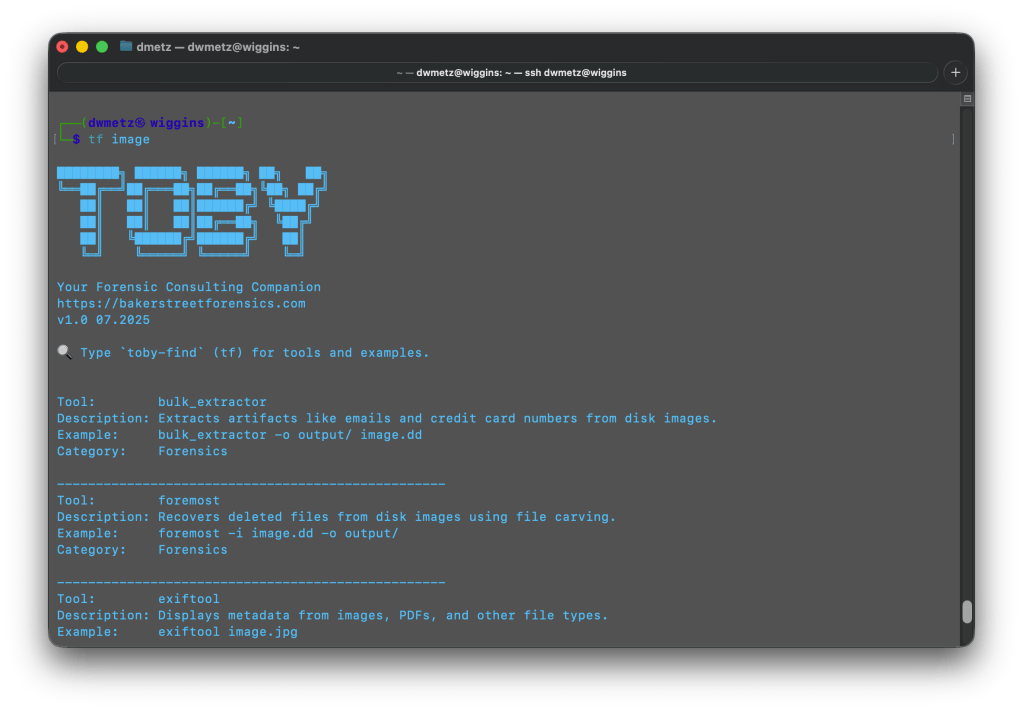
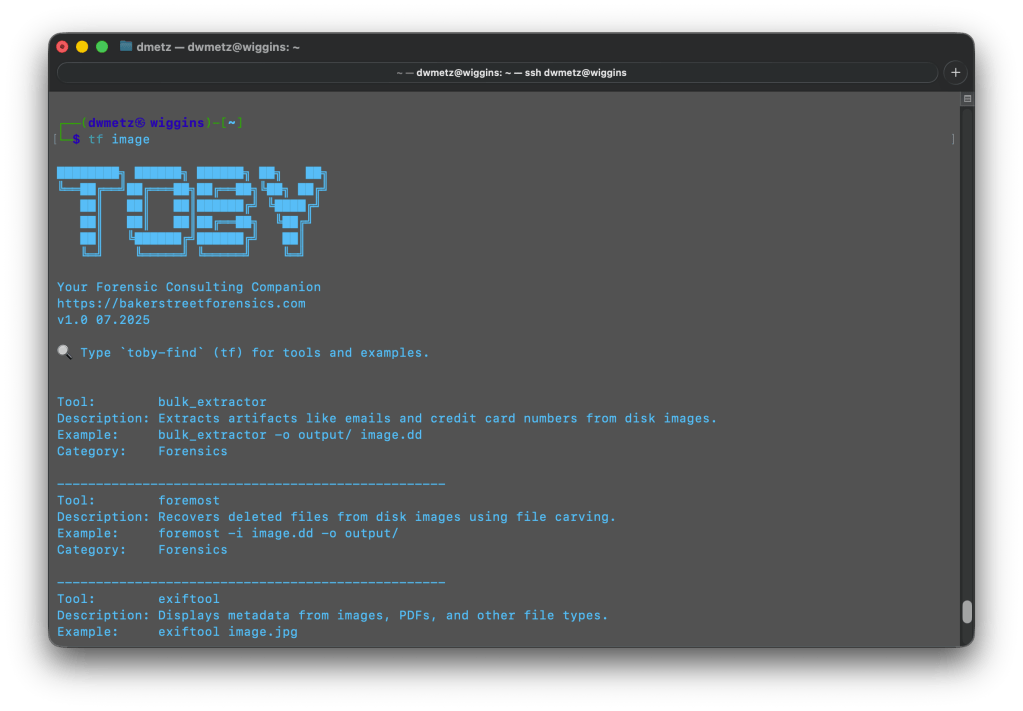
Once installed, you can launch Toby-Find (via tf, toby-find, or tf-help) from any terminal and instantly search for tools, descriptions, examples, and more.

Toby-Find on REMnux
Toby-Find on Kali

📦 Installation

1. Clone the repository:

git clone https://github.com/dwmetz/Toby.git

2. Make the install script executable:

cd Toby
chmod +x install.sh

3. Run the installer:

./install.sh

4. Follow the prompt to choose your environment (KALI or REMnux)
5. Open a new terminal or run:

source ~/.bashrc   # or ~/.zshrc depending on shell

🚀 Usage

tf [keyword]

Examples:

tf yara
tf volatility
tf hash

To view the full list:

tf-help

Whether you’re working from a custom VM, a rugged Pi, or a hardened REMnux box, Toby-Find gives you a fast, terminal-friendly way to surface the tools at your disposal — without breaking focus. It’s lightweight, portable, and easy to extend for your own lab or classroom.

You can grab the full installer from GitHub, and contributions are always welcome. If you find it helpful — or build on it — I’d love to hear about it.


Portable Forensics with Toby: A Raspberry Pi Toolkit

Whether teaching, investigating, or tinkering on the road, there’s an undeniable appeal to a device that’s self-contained, headless, and versatile enough to support forensic analysis, malware triage, and field acquisition. That idea became the seed for Toby — a Raspberry Pi Zero 2 W–based micro-rig that can be managed from an iPad or mobile device.

It started off with a “what could I do with at Raspberry Pi” and the final result: a fully functional, go-anywhere forensics toolkit that fits in the palm of your hand, carefully packed into a Grid-It travel kit and loaded with purpose.


Why Build Toby?

Toby wasn’t born from necessity. It came from a blend of curiosity, constraint, and the spirit of joyful overengineering. The goal wasn’t just to get Kali Linux running on a Pi — that’s been done. The challenge was in how much capability could be packed into a minimalist footprint without compromising on control, security, or style.

Some driving goals from the outset:

  • Headless-first: Must be operable via SSH, or VNC — no screen needed.
  • Kali-based: Full access to familiar forensic and pentest tooling.
  • Discreet and functional: Everything should be secure, practical, and stowable.
  • Modular connectivity: USB OTG, video capture, remote keyboard/mouse, and VPN support all needed to be viable.
  • Portable power: Run from a battery pack for field ops or demo use without dependency on AC power.

Hardware Selection

Raspberry Pi Zero 2 W

The Pi Zero 2 W hits a sweet spot. It has enough power to run full Kali and perform triage analysis, especially with swap and careful headless tuning. It supports USB OTG and can be powered over micro-USB, making it ideal for lightweight builds.

Grid-It Travel Kit: The Physical Layout

Instead of housing the components in a fixed enclosure, I opted for flexibility: a Grid-It organizer sleeve. It allows each cable and tool to remain accessible and secured via elastic straps — perfect for quick swaps or field reconfiguration.

The current loadout includes:

  • Raspberry Pi Zero 2 W 
  • HDMI mini to full adapter (for display recovery if needed)
  • USB micro to USB-C adapter combo (for powering Pi from laptop, iPad, or battery pack)
  • Anker battery pack (portable, long runtime)
  • Wireless keyboard (compact; paired via Bluetooth or USB receiver)
  • USB capture device (used for teaching, demoing webcam/VNC sessions)
  • Short USB OTG cable

The setup is light, self-contained, and TSA-friendly — a true digital go-bag for the forensically inclined.


Portable Power

Toby can be powered from the USB port of an iPad or from a battery pack or AC adapter, making it extremely flexible for field use.

Toby powered from iPad Pro
Toby powered from portable battery

Software

The OS is a clean, headless Kali Linux image configured specifically for ARM on the Pi Zero 2 W. Rather than trying to turn it into a desktop experience (even though it can), it boots fast, runs lean, and drops me directly into a terminal where I can get to work — whether over SSH or local keyboard.

Core Components:

Base image: Raspbian (Debian-based) with Kali tools manually installed

Metapackages:

  • kali-linux-forensic
  • kali-linux-desktop
  • core/default Kali utilities and command-line tools, incrementally layered until the system was functionally equivalent to a full Kali install (minus unnecessary services)

Additional Software Intstalled:

MalChela (CLI) running on Toby
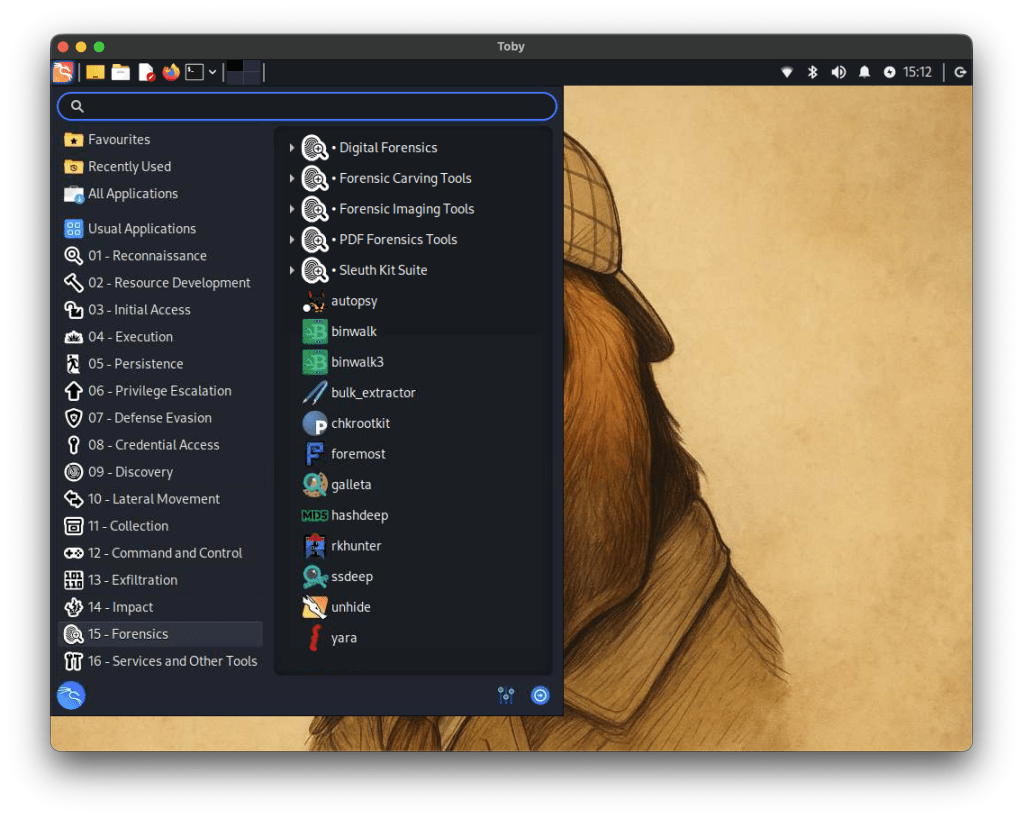
Kali Forensics tools on Toby
MalChela GUI running on Toby

🔍 Toby-find: Your On-Device Forensics Cheat Sheet

One of Toby’s handiest features isn’t a tool you run—it’s a tool to remember tools. toby-find is a simple but powerful command-line helper built into the system. It gives you fast access to a curated list of CLI forensics tools available on Toby, along with short descriptions and usage tips.

It’s like having a searchable cheat sheet, always available—perfect for field use when memory is fuzzy or connectivity is limited.

toby-find utility

What It Does

When you run:

toby-find [keyword] 

it will search the help file for any tool(s) mentioning the keyword in name or description, and provide back a simple command syntax for each tool.

Example:

dwmetz@toby:~$ toby-find strings

Tool:        mstrings
Description: Extracts printable strings from files and maps them to MITRE ATT&CK techniques.
Example:     mstrings suspicious.exe
Category:    Malware
--------------------------------------------------
Tool:        strings_to_yara
Description: Generates a basic YARA rule from strings gathered manually or via mstrings.
Example:     strings_to_yara
Category:    Malware
--------------------------------------------------
Tool:        floss
Description: Extracts obfuscated strings from malware binaries.
Example:     floss suspicious.exe
Category:    Forensics
--------------------------------------------------
Tool:        rephrase
Description: Analyzes and reformats strings from documents or binaries.
Example:     rephrase input.txt
Category:    Forensics
--------------------------------------------------

Installed Tools:

Many of the tools are native to Kali, but some, including MalChela, were compiled manually or added through custom scripts. (Bold == MalChela tools or custom scripts.)

Tool NameDescription
batCat replacement with syntax highlighting and Git integration.
binwalkScans binaries for embedded files and executable code.
bulk_extractorExtracts artifacts like emails and credit card numbers from disk images.
combine_yaraCombines multiple YARA rule files into a single merged rule set.
dffDigital Forensics Framework with CLI and GUI modes.
digPerforms DNS lookups to retrieve domain IPs and records.
exiftoolDisplays metadata from images, PDFs, and other file types.
extract_samplesExtracts files from password-protected ZIP and RAR archives.
fileanalyzerAnalyzes file metadata, headers, and hashes to assist triage and detection.
fileminerRecursively scans a directory for files of interest based on extensions and type.
flossExtracts obfuscated strings from malware binaries.
foremostRecovers deleted files from disk images using file carving.
hashcheckComputes multiple cryptographic hashes and prints them side-by-side.
hashdeepGenerates and verifies file hashes for entire directories.
hashitQuickly generate MD5, SHA1, SHA256, and SHA512 hashes of a file.
htopInteractive system monitor showing real-time process usage.
ipcalcPerforms subnet calculations for IP ranges.
ipstatusShows interface configuration and public IP address.
malchelaMain CLI launcher for the MalChela forensic toolkit, with a menu-driven interface.
malhashLooks up file hashes using VirusTotal and MalwareBazaar.
moshSSH replacement that maintains session state during roaming.
mstringsExtracts printable strings from files and maps them to MITRE ATT&CK techniques.
mzcountTallies file extensions and MIME types in a directory.
mzhashRecursively hash all files in a directory using MD5.
ncduDisk usage analyzer with an interactive interface.
nmapPerforms host discovery and port scanning on a network.
nsrlqueryChecks file hashes against the National Software Reference Library.
p0fPerforms passive OS fingerprinting from live network traffic.
reglookupQueries Windows Registry hives from the command line.
regripperExtracts and parses registry artifacts using Perl-based plugins.
rephraseAnalyzes and reformats strings from documents or binaries.
rifiuti2Parses Windows Recycle Bin INFO2 files for forensic analysis.
rkhunterScans the system for known rootkits and suspicious behavior.
rsakeyfindSearches RAM dumps for RSA private key patterns.
safecopyRecovers data from damaged or unstable storage media.
samdump2Extracts password hashes from Windows SAM files.
scalpelPerforms file carving on disk images using headers/footers.
screenTerminal window manager similar to tmux.
scrounge-ntfsRecovers deleted files from NTFS file systems.
speedPerforms a network speed test from the command line.
sshStandard secure shell for remote command-line access.
ssdeepPerforms context-triggered piecewise hashing (fuzzy hashing).
strings_to_yaraGenerates a basic YARA rule from strings gathered manually or via mstrings.
tcpdumpCaptures and displays raw network packets in real time.
tmuxTerminal multiplexer for managing multiple sessions.
toby-findLists available tools and examples installed on the Toby system.
truecrackAttempts to brute-force passwords for TrueCrypt volumes.
tsharkTerminal version of Wireshark for packet capture and filtering.
undbxExtracts messages from Outlook Express DBX mailboxes.
unarExtracts files from .rar and other archives.
unhideDetects hidden processes and tasks in Linux systems.
upxCompresses or decompresses executable files.
uptimeDisplays system uptime and load averages.
vinettoParses thumbnail caches from Internet Explorer and Firefox.
vnc-offStops the running VNC session.
vnc-onStarts a VNC server session for remote desktop access.
volatility3Memory forensics framework for analyzing RAM dumps.
vpn-offStops the active OpenVPN session.
vpn-onStarts the OpenVPN client using the configured lab connection.
winregfsMounts Windows Registry hives as a read-only virtual filesystem.
xmountConverts between forensic image formats (e.g. EWF to RAW).
xmzhashRecursively hash all files in a directory using MD5, SHA1, and SHA256.

This setup enables lightweight static analysis, file triage, memory inspection, and network capture — all from a Pi that fits in a Altoids case.


Build Process (Step by Step)

1. Flashing and First Boot

Using the Raspberry Pi Imager, I selected the ARM64 Raspbian image, added SSH and Wi-Fi credentials, and flashed the SD card.

Tip: The “advanced” options in Raspberry Pi Imager let you configure headless behavior up front, saving time on first boot.

2. Swap, Networking, and System Setup

The Pi Zero 2 W is modest on RAM — just 512MB — so swap is essential. I configured a persistent 2GB file-based swap at /swapfile, which gave the system enough breathing room to compile, run heavier tools, and avoid out-of-memory crashes during extended sessions.

Networking is Wi-Fi-only, so multiple SSIDs were configured using wpa_supplicant.conf for home and hotspot SSIDs. VPN has also been configured for remote access to my home malware lab.

3. Building and Installing MalChela

I cloned the full MalChela repository directly and compiled tool-by-tool:

cd MalChela
for tool in fileanalyzer mstrings hashcheck extract_samples ...; do
  cargo build --release -p $tool
done

4. Screen Choices

In addition to headless-mode, you can use a typical keyboard/monitor/mouse setup, for either cli mode or full gui.

The Pi Zero 2 W supports HDMI output via its mini-HDMI port, so you can plug it directly into any monitor or TV using a mini-HDMI to HDMI cable or adapter. For true portability, I needed something more flexible that didn’t require me packing a separate screen.

Toby running in desktop mode

To solve this, I added a compact USB-based HDMI capture device to the kit. It effectively turns any mobile device into a live monitor. By connecting Toby’s HDMI out to the capture card and plugging it into my iPad or iPhone,  I can preview the Pi’s screen on the go. This setup also works with OBS, QuickTime, or dedicated capture apps for recording demos or screen sessions — handy for teaching or documenting tool usage.

Input is handled with a small wireless Bluetooth keyboard, which pairs cleanly with Toby for direct control. This combo — Pi output through HDMI capture and keyboard input via Bluetooth — lets me interact with Toby completely untethered.

In practice, I rarely need the GUI. But when I do, this setup lets me bring it up quickly without dragging along a dedicated screen.


Final Result: What Toby Can Do

Toby isn’t just a cute Pi rig with a name. It’s a real tool, and its current feature set reflects that.

💼 Mobile Forensics Platform

  • Mount, triage, and scan USB drives with fileanalyzer
  • Run YARA scans and generate custom rules from strings
  • Look up hashes via VirusTotal, MalwareBazaar, and NSRL
  • Analyze memory dumps with Volatility 3 (including plugin selection)
  • Run offline IOCs scans via mstrings or custom shell scripts

What’s Next for Toby

Building Toby was an exercise in maximizing power in a small footprint through deliberate choices. For educators, students, and curious tinkerers, Toby proves that hands-on, portable, and fun learning and teaching forensics can be achieved. If you’re building your own, start with what you have: a Pi, a Grid-It, and your imagination. Sometimes, the best tools aren’t the ones with the biggest screens or fastest chips—they’re the ones you have with you.

I’m already thinking about upgrades. One in consideration is a case upgrade, a true lunchbox-style metal enclosure — something retro and rugged, with a small screen inside the lid.

Let me know in the comments if you’d like a public release of toby-find as an add-on to install for Kali builds for forensics and malware analysis.